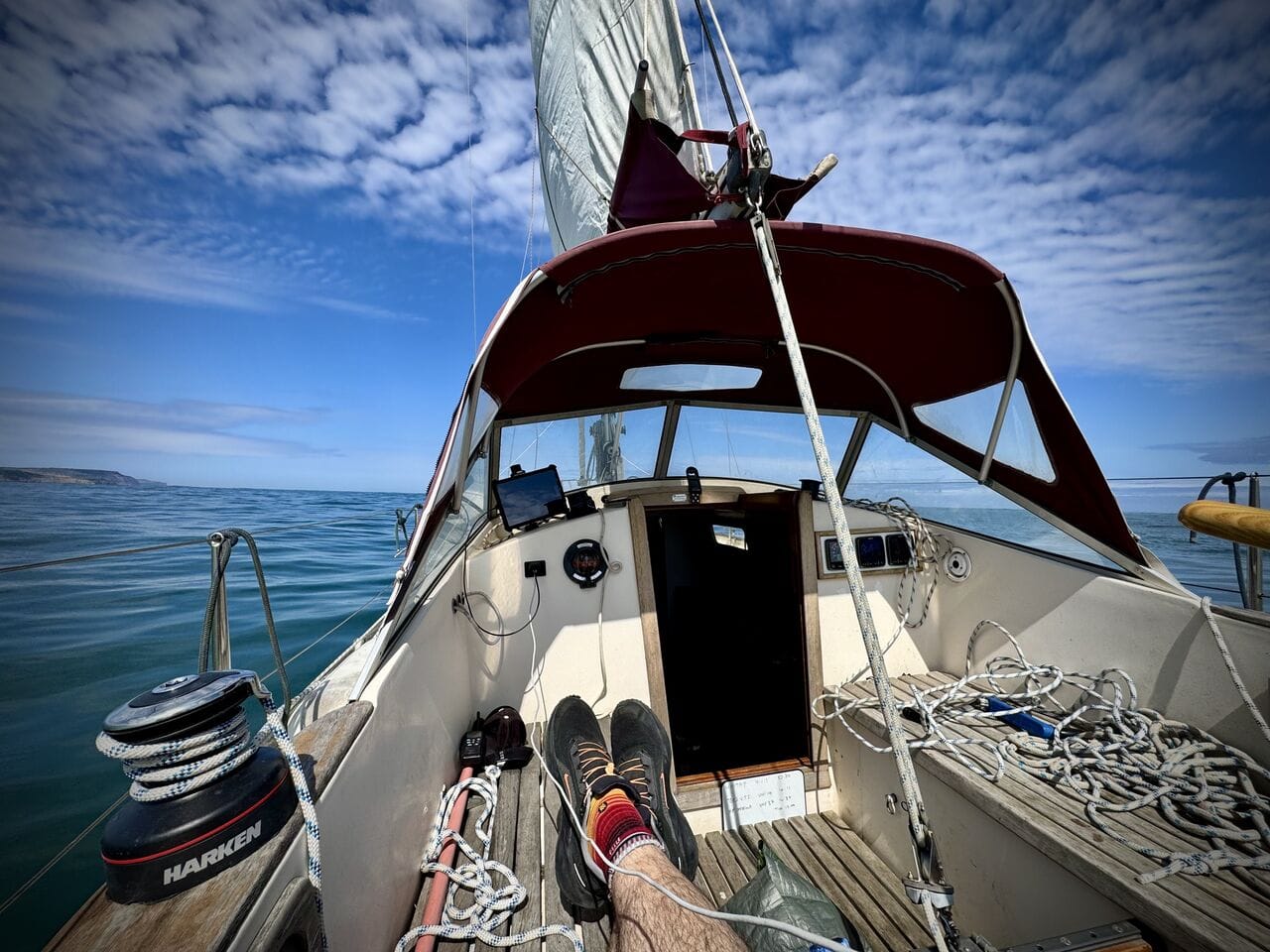
Last time I wrote about sailing, I focused on a blown-out clew. This time I was woken at 3:41am by a loud thump.
Not a line breaking. Not a collision.
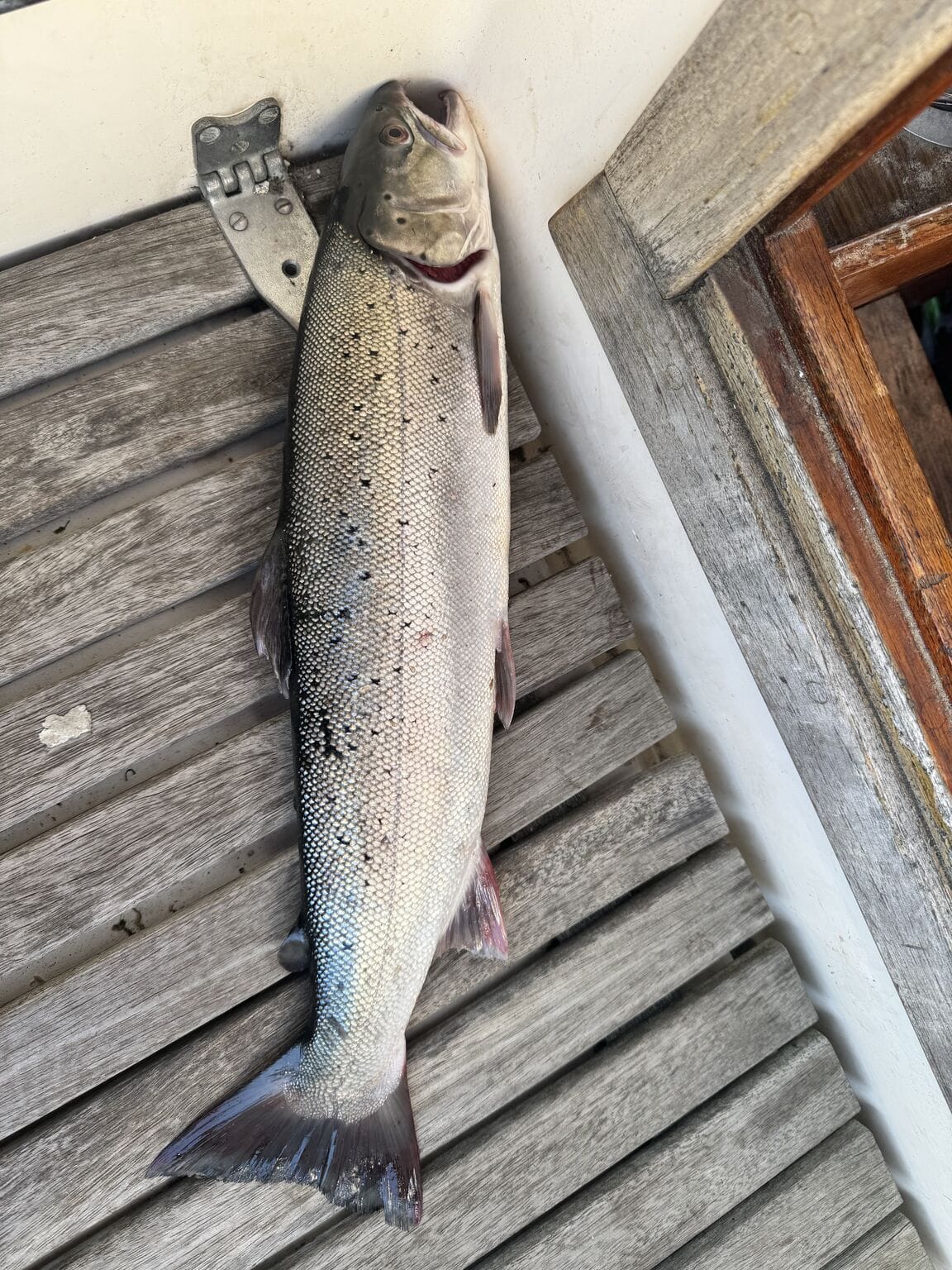
A sea trout, on the deck of my boat, having launched itself out of the water and into my night.
I lay there for a moment working out what could possibly have made that noise. Then I got up, found it, and after a brief negotiation with my conscience, and given that the poor thing had already left this world, accepted that breakfast had delivered itself.
In calm conditions, I took down the broken foresail and replaced it with the spare I keep in the locker.
The rest of the return leg was everything the outbound wasn't. Sun. Steady, gentle conditions. A boat doing exactly what she was designed to do, and a skipper with nothing to fix.
It should have been the less interesting trip. It wasn't.
The blown clew taught me something about failure; how you diagnose it, improvise round it, and keep moving. Useful lessons, and they make for a good story.
But the almost bucolic passage back taught me something harder to write about: how rarely we notice when things go right. No crisis to solve, no adrenaline, just a boat, the sea, and a fish that arrived without being asked for.
We're wired to narrate the disasters. The near-misses, the gear failures, the moments it all nearly went wrong. Those are the stories we tell at the bar and on LinkedIn. But most of the work - in sailing, in building a business, in anything worth doing - is the uneventful passage. The days nothing breaks. The stretches where the plan simply works.
Those days don't feel like achievements. They feel like nothing happened.
They're the whole point.
Originally published on LinkedIn.