Before Earthchain, my career was in payments: the systems that decide, in milliseconds and around the clock, whether a card transaction goes through.
ACI Worldwide, 2002–2007
As a technical consultant in Interlaken, I worked on the realisation and integration of complex card authorisation systems for financial institutions: requirements engineering, software engineering, scheme certification and testing.
Credit Suisse, 2007–2009
IT project manager and solution architect in Horgen, responsible for software architecture, platform engineering, and release planning and management.
Infraxis AG, 2009–2021
Infraxis builds mission-critical software powering electronic payments for major international financial institutions, with products that must be available 24/7/365.
- QA Manager (2009–2012). I led the QA function, providing testing and support services to customers and technical consulting on payments and consumer-lending applications. I designed and developed IQS, a collaborative payments testing system with a RESTful test-execution API, and later wired it into our team chat so anyone could deploy and run regression tests.
- Head of Product Development (2013–2021). I defined and implemented the strategy for product development across teams in Zürich and Leeds: planning and resourcing sprints that balanced customer projects with the product roadmap, coaching Scrum managers, and running a development process the whole team was empowered to improve.
Speaking
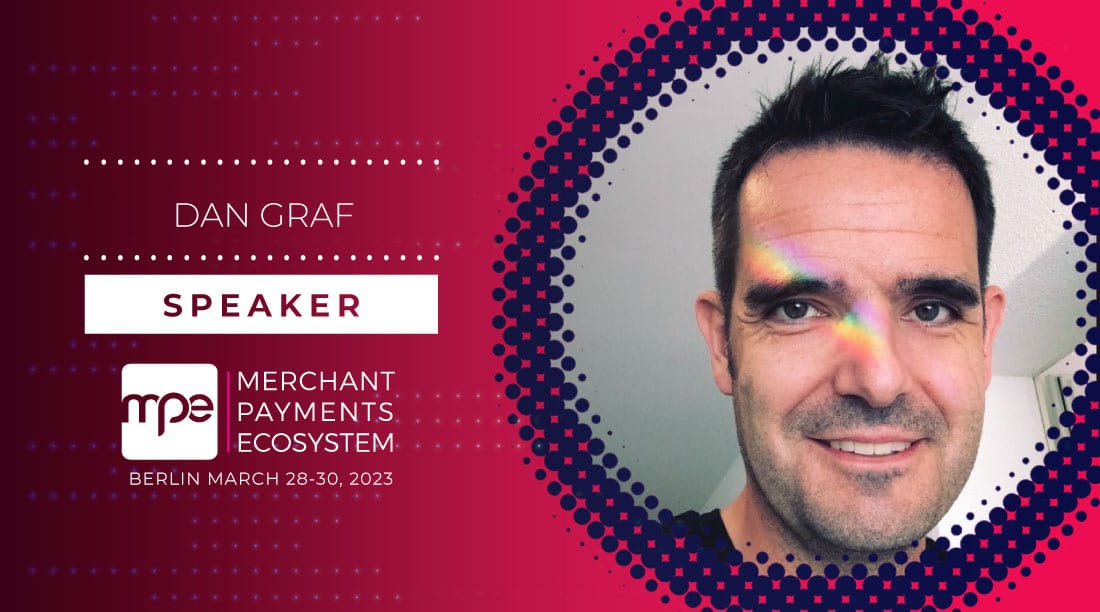
I gave the Day 1 keynote at Merchant Payments Ecosystem (MPE) in Berlin in March 2023, one of Europe's main conferences on merchant payments and acquiring. The talk looked at sustainability and payments from both directions: the industry's own footprint, and how payments can drive climate action.
The footprint of a payment
A single card transaction has a footprint of roughly 3.78 g CO₂e. About three-quarters of that comes from terminal hardware, with most of the rest from the card itself and from data centres. That points to practical fixes: optimising terminal configurations, moving to paperless receipts, circular hardware practices, and green coding principles in payments software.
Payments as a force for good
Payments reach huge numbers of consumers and merchants, which makes them a powerful channel for climate finance. PSPs can give merchants carbon accounting tools, show consumers the footprint of what they buy, and make it easy to contribute directly to climate projects. Stripe Climate, Shopify's carbon removal offering and donation options at checkout show it already works at scale.
What carries over
Payments teaches you to treat every record as if it matters, because it does: reconciliation, enrichment, idempotency, certification and audit trails. Those same disciplines now underpin how Earthchain turns invoices and bills into emissions data. They're also what I bring to fintech teams I advise today.